

Hypoxia and Diabetes: Understanding the Hidden Connection
When most people think about diabetes, they think about blood sugar.
But there is another factor receiving increasing attention in scientific research—oxygen.
The body’s cells require oxygen to produce energy, maintain healthy metabolism, and support tissue repair. When tissues don’t receive enough oxygen, a condition known as hypoxia occurs. Researchers now recognize that hypoxia is not only a consequence of diabetes but may also contribute to the progression of insulin resistance and many diabetic complications.
Understanding this relationship may help individuals with diabetes make more informed decisions about supporting their overall health.

The lack of oxygen, or hypoxia, would appear very far removed from any connections with diabetes mellitus – a condition of abnormal glucose metabolism.
Indeed, in recent years, medical scientists are beginning to find out that hypoxia is closely associated with disease processes in diabetes, and is not only the result of abnormal blood circulation present in diabetes, but is also responsible for driving progression of some diabetic complications’
Fat Cell Hypoxia
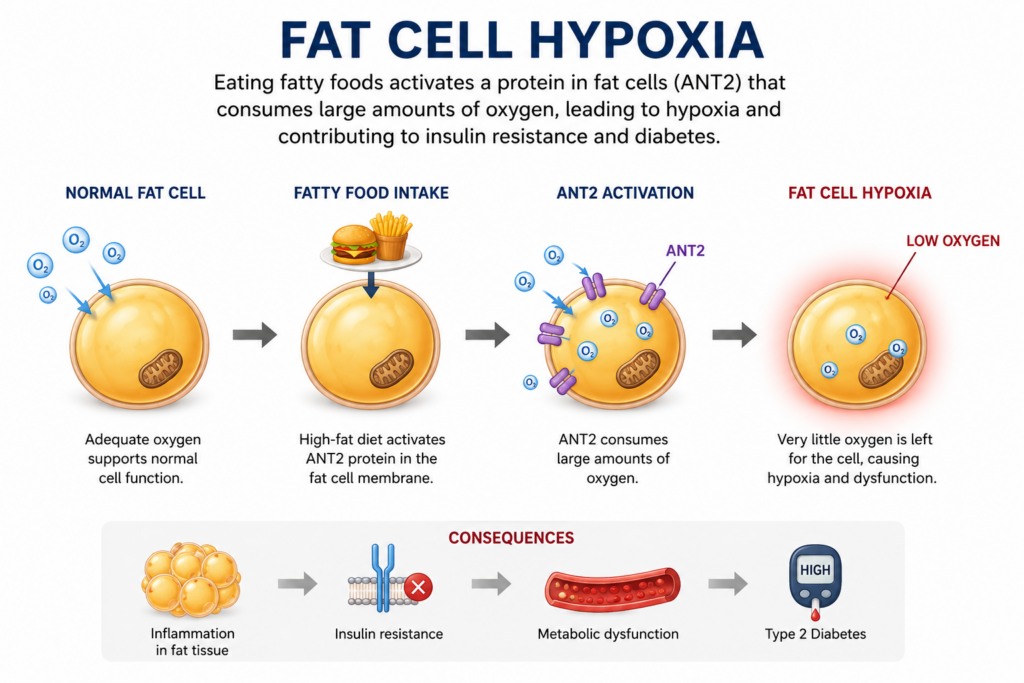
Fat cell hypoxia is clearly a factor that contributes to the development of insulin resistance and eventually, diabetes. The role that hypoxia plays in the causation of a diabetic state was made clearer through the work of researchers at the University of California, San Diego School of Medicine.
They discovered that eating fatty foods causes activation of a protein inside the fat cell membrane, called adenine nucleotide translocase 2 (ANT2), which consumes huge amounts of oxygen, leaving very little for the rest of the cell.
The Link Between Hypoxia and Diabetes
Researchers have discovered that hypoxia is closely associated with several processes involved in diabetes.
Reduced oxygen availability can affect how cells utilize glucose, produce energy, and respond to insulin.
One area receiving particular attention is fat cell hypoxia.
As fat tissue expands, especially around the abdomen, oxygen delivery may not keep pace with the increased demand. This creates localized hypoxia inside fat tissue, which contributes to chronic inflammation and may interfere with normal insulin signaling.
The result may be increasing insulin resistance over time.
Figure 1. Illustration of the major physiological and metabolic processes with which adipose tissue is involved through the secretion of various adipokines from adipocytes. The interactions may be autocrine, paracrine, or endocrine.
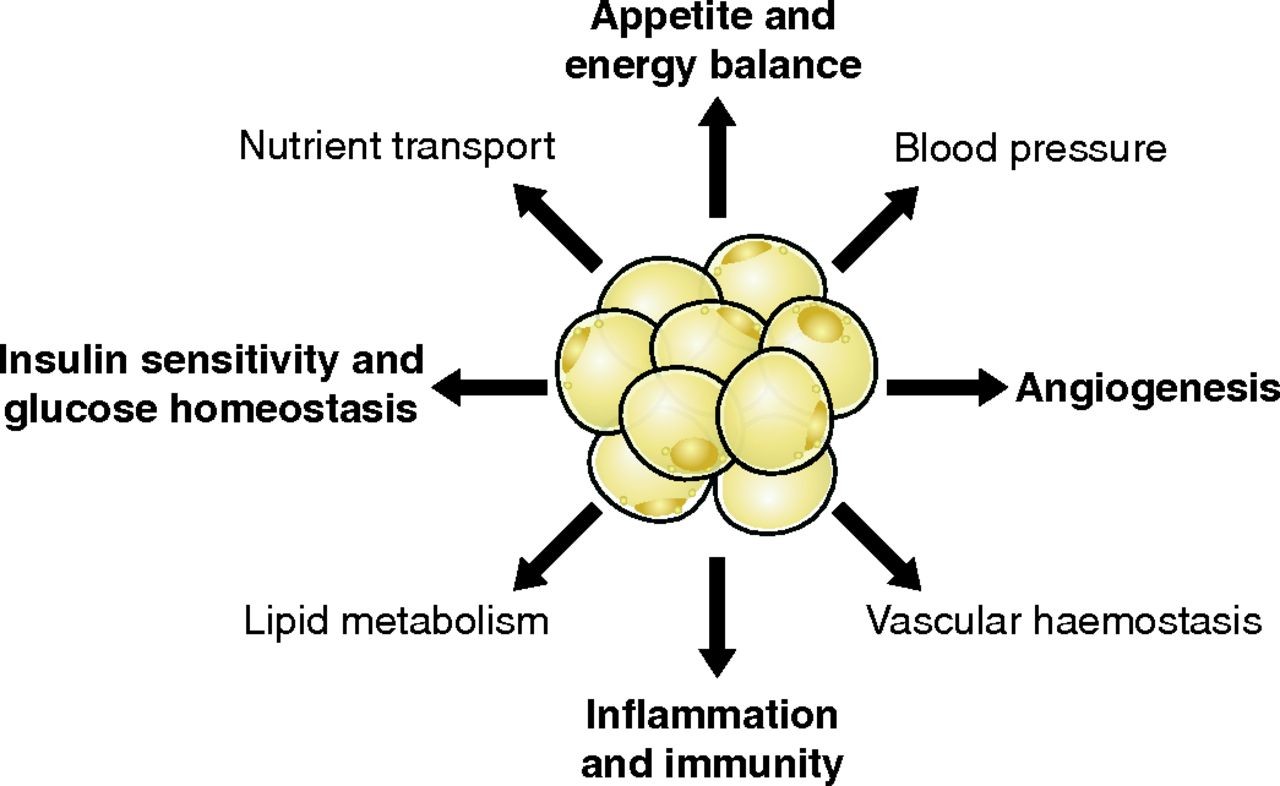
When a cell is oxygen starved (hypoxic), it becomes ‘stressed” and will release nasty substances called ‘chemokines” that turn on the immune system’s inflammatory response. When this happens, the resulting low-grade tissue inflammation will impair the way cells interact with insulin, which leads to insulin resistance – a state where insulin gets less and less effective in lowering blood sugar: This precedes the development of type 2 diabetes?.
Hypoxia in Diabetes Patients
Diabetes patients suffer poor blood flow through the narrowed small blood vessels (microangiopathy)® all over their body. This means that the oxygen carried in red blood cells have difficulty getting through these narrowed vessels to reach the body tissue.
In a clinical study conducted in the Netherlands, researchers found that people with diabetes, when compared to healthy subjects without diabetes. have consistently lower tissue oxygen values measured at various sites of the body. They deduced that this could be due to the narrowed blood vessels supplying inadequate oxygen to the body cells, causing hypoxia?. The doctors at the Hyperbaric Unit, Royal Adelaide Hospital, The University of Adelaide, South Australia also discovered that increasing the patient’s body oxygen levels using hyperbaric oxygen therapy led to better response of the body to insulin with more effective blood sugar lowering, further drawing the link between diabetes and body oxygen levels*.
Sleep Apnea
Obstructive sleep apnea (OSA) occurs when your throat muscles intermittently relax and block your airway during sleep, commonly observed as snoring. This causes breathing to repeatedly stop and start during sleep. leading to intermittent lack of oxygen to the brain. Severe obstructive sleep apnea (OSA) increases a person’s risk of developing diabetes by 30% or more, according to a study of 11,000 patients published in the American Journal of Respiratory and Critical Care Medicine. Intermittent hypoxia in people with obstructive sleep apnea is found to propagate insulin resistance and increase the risks of developing diabetes. Now that that link has been confirmed in such a large trial with a long follow-up period, clinicians may be able to intervene and take diabetes prevention measures for patients with OSA who have not yet developed the disease.

Why Oxygen Matters
Every cell in your body depends on oxygen to produce energy.
When oxygen delivery is optimized, cells are better equipped to:
- Produce cellular energy (ATP)
- Support healthy metabolism
- Maintain normal tissue function
- Remove metabolic waste
- Support the body’s natural repair processes
While oxygen alone is not a treatment for diabetes, maintaining healthy oxygen availability is an important part of overall cellular health.
Oxygen Bath Therapy at Oxylon Wellness
At Oxylon Wellness, we offer a unique 3-Bath Oxygen Therapy Protocol designed to support the body’s natural oxygenation process. Visit our Oxygen Therapies page to learn more.
Our oxygen baths are infused with stabilized oxygen, allowing oxygen-rich water to come into contact with the skin in a relaxing, non-invasive experience.
Many clients choose oxygen bath therapy as part of their broader wellness routine to support healthy circulation, relaxation, and overall vitality.
The Three-Bath Protocol provides a structured introduction that allows individuals to experience the therapy over multiple sessions while working toward optimal oxygen support.
Many individuals with diabetes have reported feeling more energized and refreshed after completing the protocol. While individual experiences vary, clients often describe improvements in their overall sense of well-being as part of their wellness journey.
Why Start with Three Baths?
Rather than a single session, our Three-Bath Oxygen Therapy Protocol allows your body time to gradually adapt while providing repeated opportunities for oxygen-rich bathing.
Many clients appreciate the cumulative benefits of multiple sessions as part of their wellness plan.
Your experience includes:
- Three oxygen bath sessions
- Oxygen-infused stabilized water
- A relaxing, non-invasive wellness experience
- Guidance from the Oxylon Wellness team
- Personalized recommendations for continued wellness support
A Whole-Body Wellness Approach
Managing diabetes involves many lifestyle factors, including:
- Healthy nutrition
- Physical activity
- Sleep
- Stress management
- Healthy circulation
- Adequate oxygen delivery
At Oxylon Wellness, we believe supporting the body’s natural physiology through innovative wellness technologies can complement a healthy lifestyle and ongoing medical care.
Our oxygen bath therapy is designed to help support overall wellness—not replace the advice or treatment provided by your healthcare team.
Frequently Asked Questions
Can oxygen bath therapy treat diabetes?
No. Oxygen bath therapy is not a treatment or cure for diabetes. It is a wellness therapy designed to support healthy circulation, relaxation, and overall wellness alongside appropriate medical care.
Why is oxygen important for people with diabetes?
Healthy oxygen delivery supports normal cellular energy production, tissue function, and circulation. Research suggests hypoxia may play a role in insulin resistance and diabetic complications.
What is the Three-Bath Oxygen Therapy Protocol?
The Three-Bath Protocol includes three stabilized oxygen bath sessions designed to introduce clients to oxygen bath therapy as part of a comprehensive wellness program.
References:
I. Mechanisms of Disease: the hypoxic tubular hypothesis of diabetic nephropathy. Nature Clinical Practice Nephrology volume 4, pages 216-226 (2008).
2. Increased Adipocyte O2 Consumption Triggers HIF-la Causing Inflammation and Insulin Resistance in Obesity. Cell. 2014 June 5; 157(6): 1339-1352.
3. Reference value of transcutaneous oxygen measurement in diabetic patients compared with nondiabetic patients. J Vasc Surg 2008;48:382-8.
4. Hyperbaric oxygen therapy improves peripheral insulin sensitivity in humans. Diabet Med.
2012 Aug;29(8):986-9.
5. Obstructive Sleep Apnea and Incident Diabetes. A Historical Cohort Study. American Journal of Respiratory and Critical Care Medicine Volume 190 Number 2, July 15, 2014.
6. Sleep Apnea in Type 2 Diabetes. Diabetes Spectrum 2016 Feb; 29(I): 14-19.
Disclaimer: This article is for educational purposes only and is not intended to diagnose, treat, cure, or prevent any disease. Individuals with diabetes should continue working with their healthcare provider for diagnosis and treatment. Oxygen bath therapy should be considered a complementary wellness modality as part of an overall healthy lifestyle.