
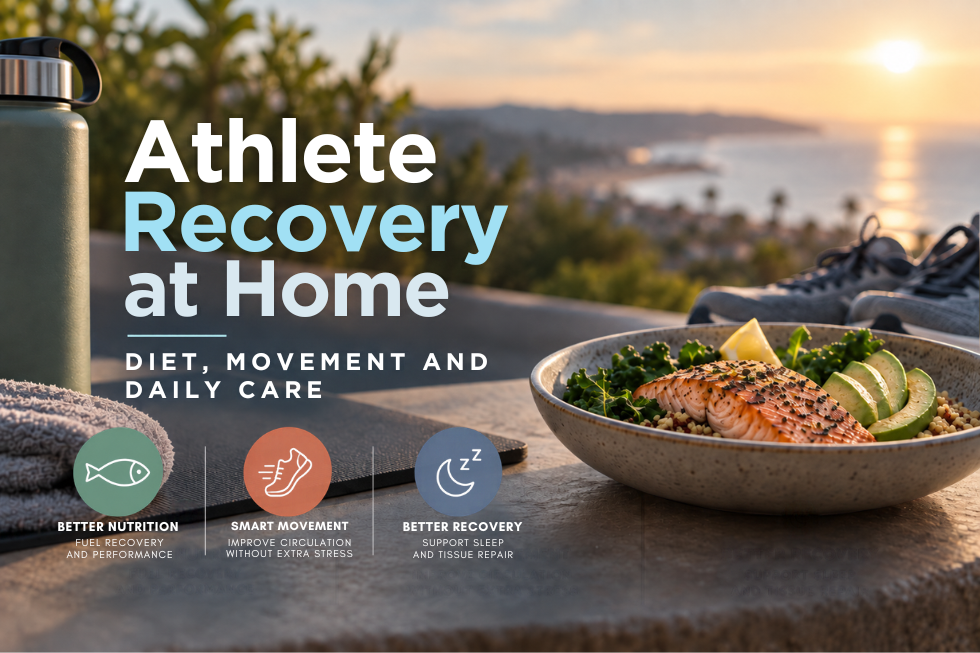
The recovery work that happens between sessions, and what it actually looks like
Recovery advice for athletes tends to arrive in two flavors. Either it is a slogan, sleep more, or it is a shopping list of devices that costs more than your bike.
This article is the middle ground. Everything below comes from the home therapy and diet sections of the sports recovery protocol Dr. Steven Zodkoy wrote for Oxylon, and most of it costs nothing. None of it requires an appointment, and none of it is training advice. Your programming is between you and your coach.
Take the parts that fit your week. Partial is fine. Consistency beats completeness here by a wide margin.
Start with the plate, because you control it daily
Dr. Zodkoy’s diet guidance for this protocol is short, which is why it is actually followable. Four things to reduce, one thing to add.
Reduce or avoid:
- Simple carbohydrates. The fast in, fast out ones. White bread, pastries, most cereals, the snacks that leave you hungry an hour later.
- Sugar. Including the sugar you are not counting, which for athletes often hides in sports drinks, bars, gels consumed well outside of training, and recovery shakes.
- Alcohol. This one is worth being honest about, because the post race beer and the Friday wine are part of the culture of every sport. It is a factor in both sleep quality and inflammation, which are two of the four things this protocol is built around.
- Chemicals found in food. Preservatives, artificial colors and flavors, and the long ingredient lists in packaged convenience food.
One thing to note, because it comes up a lot in athlete nutrition content. This protocol does not restrict nightshades. If you have read that tomatoes, peppers and eggplant need to go, that is not part of this guidance, and there is no reason to make eating harder than it needs to be when your calorie demand is already high.
Add oily fish four times a week
The single addition is specific: oily fish, with wild salmon and sardines named directly, four times a week.
Four times is more than most people manage, so make it easy rather than aspirational. Tinned sardines on toast after a morning session is a legitimate meal. Tinned wild salmon goes into a salad in four minutes. Nobody is asking you to cook.
Being in Orange County you have unusually good access to fresh fish, so use the fresh version when it is convenient. But the tinned version counts, and hitting four days across the week matters more than the quality of any one meal.
Move on your easy days, and move in ways that move blood
The protocol names three forms of movement specifically: walking, whole body vibration and swimming. Notice what they have in common. None of them is a training stimulus. All of them promote circulation.
- Walking. The most underrated item in every protocol Dr. Zodkoy wrote. Daily, unremarkable, sustainable, and it keeps blood moving through small vessels without adding meaningful stress to a system that is already carrying plenty.
- Whole body vibration. A platform that vibrates while you stand on it. Short and low effort, which makes it realistic on days when you have nothing left.
- Swimming. Full body, low impact, and easy to access year round in Orange County. Useful for runners and field sport athletes in particular, because it moves everything without loading anything.
For an athlete the discipline here is not doing these. It is doing them at the right intensity. The temptation on an easy day is to make the walk into a hike or the swim into a set. If you turn recovery movement into training, you have added stimulus to a system you were trying to support. Keep it genuinely easy.
Home laser therapy
Dr. Zodkoy notes that home laser therapy would be extremely useful in this protocol. It is the one item here that involves buying a device.
It extends the in session laser step into your own house, applied over the areas that bother you most. For an athlete that usually means the recurring spots you already know by name, and the advantage of a home unit is frequency: you can use it on the day something flares rather than waiting for a visit.
Everything else in this article is free, so consider this one optional rather than as a barrier to starting.
Adjunct care with a local practitioner
The protocol recommends adjunct care with a local applied kinesiologist or chiropractor. This is worth understanding rather than skipping.
Both work on movement, structure and the systems that influence circulation and regulation, rather than on any one sore spot in isolation. For an athlete with a history of past injuries, and Dr. Zodkoy names past injuries directly as one of the things recovery varies by, that structural view tends to be more useful than another round of working on it yourself with a foam roller.
Orange County has plenty of both, and this is care you can arrange locally with no connection to Oxylon at all. It also sits alongside, not instead of, any physical therapy or medical care you are already receiving.
Protect sleep like it is part of the program, because it is
Disrupted sleep is one of the four factors in Dr. Zodkoy’s framing, and it is the one most affected by the things that surround training rather than the training itself.
Late evening high intensity sessions, alcohol, caffeine carried too far into the afternoon, and screens during the hour that should be winding down all show up here. So does the athlete habit of scheduling the day so tightly that the only flexible hour is the one at the end.
You do not need a sleep overhaul. Pick the single item you already know is costing you and address that one. The others can wait.
About the highlighted ingredients
Dr. Zodkoy highlights five ingredients in this protocol: CoQ10 or Ubiquinol, PQQ, collagen, boswellia and cordyceps.
In his description, CoQ10 or Ubiquinol supports mitochondrial energy production and reduces oxidative stress from intense training, and PQQ sits at the intersection of mitochondrial health, antioxidant defense and cellular repair. Collagen supports tendon and ligament repair, which he notes is especially relevant in high impact sports. Boswellia eases inflammation, protects joints, supports connective tissue repair and reduces exercise induced pain. Cordyceps supports ATP production, reduces inflammation, sharpens mental focus and stabilizes stress hormones.
Named ingredients are informational only. Brands and dosages belong in a personalized plan rather than a blog article. Check for allergies and speak with your own healthcare provider before starting anything, and if you compete under an anti doping code, check any supplement against your governing body’s rules first. Nothing here is a reason to stop or change anything your physician has prescribed.
A realistic first week in Costa Mesa
That is most of the home protocol, and none of it needs an appointment. When you want to know where you are starting from, the next step is a conversation.
Start with the diet and movement steps this week. Fill out the short sports recovery form and our team at Oxylon Wellness in Costa Mesa will reach out whenever you are ready.
Disclaimer:
This article is for educational purposes only and is not medical advice. Oxylon Wellness does not diagnose, treat, or cure any medical condition, and the protocols described are wellness programs intended to run alongside, not in place of, care from your own physician. Individual experiences vary. Always consult your healthcare provider before beginning any new wellness program, dietary change, or supplement, and check for allergies. Protocols were developed by Dr. Steven Zodkoy, DC, CNS, DACBN, who is Oxylon Wellness’s Clinical Protocol Advisor and Referral Partner and does not practice at Oxylon Wellness.